New Products October 16, 2026
Introducing the KLS 150: Professional Closed-Back Headphones Built for Real-World Monitoring
Hear Every Detail. Trust Every Decision.
Monitoring is where confidence can disappear quickly.
A low end that feels right in your headphones falls apart on another system. A great vocal take comes back with too much headphone bleed. On stage, the room is fighting your monitor level. Three hours into a session, pressure and heat become more distracting than the mix.
These are not edge cases. They are the realities professional headphones have to deal with every day.
So when sE set out to enter the world of professional monitoring headphones, simply making another pair of closed-backs wasn’t enough.
The KLS 150 was engineered for the complete workflow: critical monitoring, mixing, recording and live sound. A custom 40 mm transducer provides detailed, controlled reproduction. An innovative Bass Control lets you tailor the low-frequency response. A dual-shell earcup construction delivers strong passive isolation. Premium memory foam supports long sessions, while glass-fiber reinforced components, corrosion-resistant spring steel and a locking detachable cable prepare the KLS 150 for professional life beyond the studio desk.
This is a new category for sE.
But the thinking behind it is very familiar.
Professional Headphones Have to Solve More Than One Problem
There is no shortage of headphones that sound impressive for the first few minutes.
Professional monitoring asks for something different.
You need enough detail to hear what is actually happening. Low frequencies need to remain controlled enough to make useful decisions. Isolation matters when microphones are open or the environment gets loud. The headphones need to remain comfortable after the novelty wears off. And if they travel between sessions, stages and studios, they have to survive being treated like working equipment.
Most importantly, all of those things have to work together.
That became the philosophy behind the KLS 150: not a collection of headline features, but a monitoring system designed around the decisions audio professionals actually make.
It Starts With What You Hear
At the heart of the KLS 150 is a custom-engineered 40 mm heavy-duty transducer, developed to deliver powerful, detailed and well-balanced sound with low distortion.
The emphasis on low-frequency control is deliberate.
Bass is one of the easiest parts of a recording or mix to misjudge. If your monitoring exaggerates it, you may remove low end that the production actually needs. If it understates it, the opposite can happen. Either way, a decision made in one listening environment can become a problem everywhere else.
The KLS 150 is designed around accurate, controlled low-frequency reproduction so that the bottom end remains useful rather than simply impressive.
That distinction matters.
Professional monitoring should not constantly flatter what you are listening to. It should give you information you can act on.
Whether you are balancing kick and bass, checking the weight of a vocal, editing a recording or building a monitor mix, the objective is the same: hear enough of what is happening to make the next decision with confidence.
Bass Control: Because One Listening Situation Doesn’t Fit Every Workflow
Low-frequency preferences and monitoring requirements aren’t identical for every engineer, artist, or application.
That’s why the KLS 150 includes an integrated Bass Control, allowing you to tailor the low-frequency response to the way you’re working. In the studio, you may want to establish a familiar reference for critical listening. During tracking, a performer may prefer a different low-frequency presentation in the cue mix. In live sound or general listening, another balance may be more useful.
The KLS 150 gives you that flexibility directly at the headphones.
But adjustable bass only becomes a professional tool when it’s used deliberately. If you’re making critical mix decisions, constantly changing the response would defeat the purpose of having a trusted reference. Establish the setting you know, learn how it translates, and work consistently from there. When the application changes, Bass Control gives you another option without requiring another pair of headphones.
Interchangeable Earcup Covers: Built for Configuration
The KLS 150 also introduces interchangeable earcup covers, giving you another way to configure the headphones around your setup.
The design has a practical purpose, too. The covers help protect the Bass Control knobs from accidental adjustment, helping keep your chosen setting in place during use. Once you’ve established the low-frequency response you want for a session, you don’t have to worry about inadvertently changing it while handling or wearing the headphones.
But the interchangeable design also opens up something less common in professional headphones: personalization.
Additional customization options will become available at a later date, giving users more ways to make the KLS 150 their own. The important point for the launch is that the system is already built into the headphones from the beginning.
It’s a small detail, but it’s part of a broader design philosophy: professional equipment should work around the person using it, not force every user into exactly the same configuration.
The setting you choose stays where you put it. And, over time, the headphones can become more personal to you.
Isolation Where It Actually Matters
Closed-back headphones have one major job that open-back designs simply aren’t built to do: control what gets in and what gets out.
During recording, headphone spill can find its way into an open microphone. Push a cue mix hard enough and the click, guide track or backing mix can become part of a take you intended to keep clean.
On a loud stage, the problem moves in the opposite direction. The environment competes with what you are trying to monitor.
The KLS 150 addresses both with an innovative dual-shell earcup design engineered for strong passive sound isolation.
For tracking, that helps reduce headphone bleed into microphones.
For live sound monitoring, it helps reduce the influence of the surrounding environment so you can focus more clearly on the signal you are checking.
For mobile production and less-controlled spaces, the same isolation gives you a more contained listening environment when monitor speakers may not be practical.
There is an important distinction: this is passive isolation, not active noise cancellation. Fit, seal and the level of the environment still matter. On an exceptionally loud stage, no pair of headphones makes the surrounding sound disappear.
The goal isn’t to pretend the environment doesn’t exist.
It’s to give you more control within it.
Comfort Isn’t Cosmetic. It’s Part of Monitoring Accuracy.
You can build an excellent transducer and still build headphones professionals don’t want to wear.
Long sessions expose everything.
Pressure around the head becomes fatigue. Poor ear pads become heat and discomfort. An inconsistent seal can affect both isolation and the way low frequencies are perceived. Suddenly, ergonomics are no longer separate from performance.
The KLS 150 uses premium memory foam that adapts naturally to the shape of the head, combined with high-quality leatherette ear pads designed for comfort, sealing and a premium feel.
The ergonomic design distributes pressure evenly, while the headphones themselves weigh 335 g / 11.8 oz.
That balance matters whether you’re editing for hours, tracking take after take, mixing late into the night or spending a show with headphones moving on and off your head.
And because personal preference matters, optional velour ear pads are available for users who want to configure the KLS 150 differently.
Professional comfort shouldn’t mean handling the headphones carefully and hoping they last.
Which brings us to the other half of the design.
Built to Leave the Studio
Working headphones get used.
They get folded. Packed. Adjusted. Thrown into cases. Taken to rehearsals. Shared between sessions. Put on and pulled off hundreds of times.
The KLS 150 was built with that reality in mind.
Glass-fiber reinforced components provide strength without unnecessary weight, while corrosion-resistant spring steel is used for long-term mechanical reliability.
The high-quality cable is detachable, so one of the most frequently stressed parts of a professional headphone setup isn’t permanently tied to the life of the headphones. A locking connector helps keep that cable securely in place while you’re working.
Then there are the workflow details you tend to appreciate after the first week rather than the first five minutes.
Laser-etched reference markers help you return quickly to your preferred headband setting. The earcups swivel through 90 degrees for straightforward one-ear monitoring. Multiple folding configurations make storage and transport easier.
None of those features will rescue a bad mix.
That’s precisely the point.
They’re there to remove friction from the hundreds of small actions that happen around the work.
One Pair of Headphones Across Studio, Stage and Recording Workflows
The real strength of the KLS 150 is not one isolated specification. It’s the way the design adapts to different professional environments.
For recording and tracking, the closed-back dual-shell construction helps control spill, while the secure fit and long-session comfort support performers through repeated takes.
For mixing and critical monitoring, the custom 40 mm transducer and controlled low-frequency reproduction provide a dependable basis for tonal decisions, with Bass Control available when you intentionally want another low-end perspective.
For live sound, passive isolation helps reduce distraction from the venue, the rugged construction is designed for demanding environments, and 90° swiveling earcups make quick one-ear checks straightforward.
For mobile engineers, musicians and content creators, the folding design, detachable locking cable and included adapters make it easier to move between systems without treating the headphones like fragile studio furniture.
That flexibility is intentional.
Professional workflows rarely stay in one room.
What About Mixing on Closed-Back Headphones?
It’s a fair question.
Closed-back headphones and open-back headphones behave differently, and loudspeakers in a room present sound differently again. No single monitoring system gives you every perspective.
The KLS 150 is designed to support critical monitoring and mixing, but it doesn’t make cross-referencing unnecessary.
A trusted pair of monitors, another playback system or a second headphone reference can still reveal things that one listening environment does not. The same is true of Bass Control: changing the low-frequency response gives you another useful perspective, but it doesn’t automatically make a mix translate.
What matters is learning the monitoring system you’re using.
The KLS 150 gives you a controlled, configurable reference. Experience and judgement still turn that information into decisions.
That’s not a limitation unique to the KLS 150.
That’s how monitoring works.
Everything You Need to Get to Work
The KLS 150 ships with the practical connections required for modern professional setups: a straight 3 m / 10 ft detachable cable, a 3.5 mm to 6.35 mm screw-on adapter, a 3.5 mm to USB-C adapter, an earcup-cover opening tool and a protective drawstring pouch.
Optional accessories including velour ear pads, a coiled cable, protective case options and interchangeable earcup covers give you more ways to configure the KLS 150 around your workflow. The interchangeable covers also open the door to future customization options, allowing the headphones to become more personal to the engineer, musician or creator using them.
Again, the goal is not complexity.
It’s adaptability.
A New Category. The Same sE Approach.
Moving into professional headphones means moving into one of the most personal parts of the signal chain.
A microphone captures the performance.
A monitoring system influences what you decide to do with it next.
That responsibility shaped the KLS 150.
The custom transducer addresses what you hear. Bass Control addresses how the headphones adapt. The dual-shell construction addresses the environment around you. Memory foam and ergonomic pressure distribution address the hours you spend wearing them. Reinforced materials, spring steel and the locking cable address what happens when professional gear meets professional life.
Every element has a job.
And that’s ultimately what the KLS 150 is about.
Not adding features for the sake of a specification sheet. Not pretending headphones can replace judgement, technique or every other monitoring reference.
Giving engineers, producers, musicians and creators a professional closed-back headphone they can depend on across the moments where listening turns into decision-making.
The KLS 150.
Hear Every Detail. Trust Every Decision.
Related products
Read more
-
Oct 02
V8: The New Benchmark in Live Vocal Performance
-
Sep 14
The sE8 Omni Family Expands with New Single Microphone and Capsule Options
-
Sep 02
Meet the New VR1 & VR2 Accessories: Precision Support for Your Most Detailed Recordings
-
Aug 20
V7 MC1 & MC2 CHROME: Premium Wireless Capsule Performance, Now in Chrome
-
Jul 10
The X1 A Gets a Fresh New Look: Introducing the Red & White Editions
-
Jun 30
Small Tool, Big Impact: Why the V CLAMP Deserves a Spot in Every Drum Setup
-
Jun 30
V7 X Black: The Sound You Trust, Now in Black
-
 Jun 10
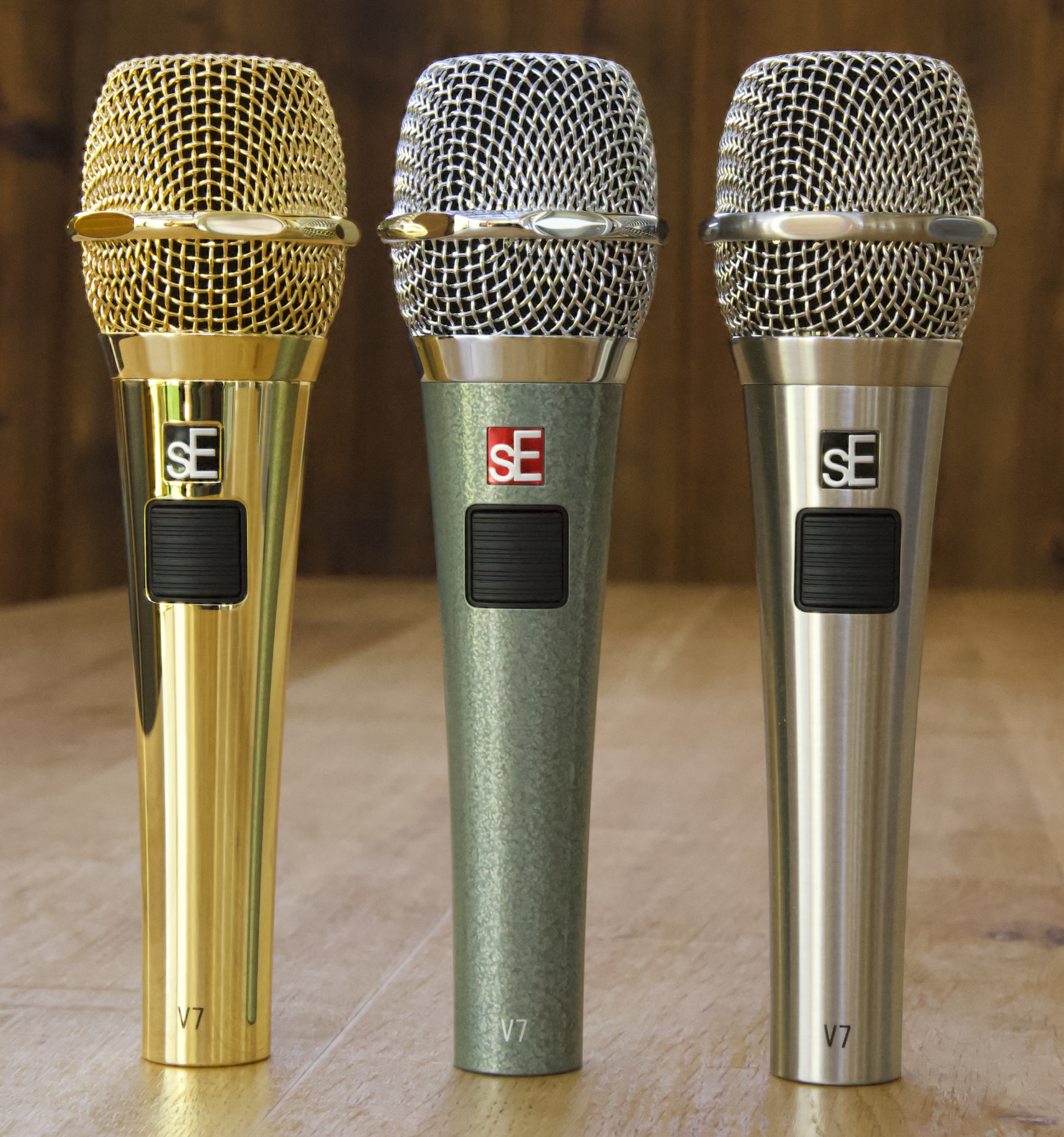
V7 PTT Now Available in Gold, Nickel, and Vintage Finishes
-
May 26
V PACK Eloy Casagrande: Built for the Demands of Modern Metal