How-To's Product Reviews August 12, 2026
Small-Diaphragm vs. Large-Diaphragm Condensers: Which Do You Actually Need?
If you’re shopping for a condenser microphone, one of the first decisions you’ll encounter is whether to choose a small-diaphragm condenser or a large-diaphragm condenser. It’s a comparison that appears in countless buying guides and forum discussions, but the answers are often reduced to simple rules like “small diaphragms are for instruments” and “large diaphragms are for vocals.”
While there’s some truth behind those recommendations, they’re far from the complete picture.
In practice, both types of condenser microphones are incredibly versatile. The right choice depends on what you’re recording, how you want it to sound, and the environment you’re recording in. Understanding the strengths of each microphone will help you make a better investment and build a more flexible recording setup.
Small-Diaphragm vs. Large-Diaphragm Condensers: What’s the Difference?
The diaphragm is the thin membrane inside the microphone that reacts to sound waves. Its size influences how the microphone responds to transients, off-axis sound, and subtle details, but it doesn’t automatically determine sound quality.
Instead, diaphragm size contributes to the microphone’s overall character.
A small-diaphragm condenser microphone is generally known for fast transient response, accurate reproduction, and consistent off-axis performance. These qualities make it an excellent choice when preserving the natural character of an instrument is the priority.
A large-diaphragm condenser microphone often delivers greater sensitivity and a presentation that many engineers describe as full, detailed, or intimate. That’s one reason they’re so commonly used for vocal recording.
It’s important to remember that these are general characteristics rather than hard rules. Capsule design, electronics, polar pattern, and microphone tuning all influence how a condenser microphone performs.
When Should You Choose a Small-Diaphragm Condenser?
Small-diaphragm condensers are often the first choice when precision matters.
Their ability to capture fast transients makes them ideal for sources with plenty of attack and detail, including acoustic guitar, piano, percussion, drum overheads, strings, and orchestral instruments. Their consistent off-axis response also makes them particularly great for stereo recording techniques, where maintaining a balanced stereo image is critical.
Rather than adding character, many engineers choose an SDC because it faithfully captures what’s already there.
Recommended sE Microphones
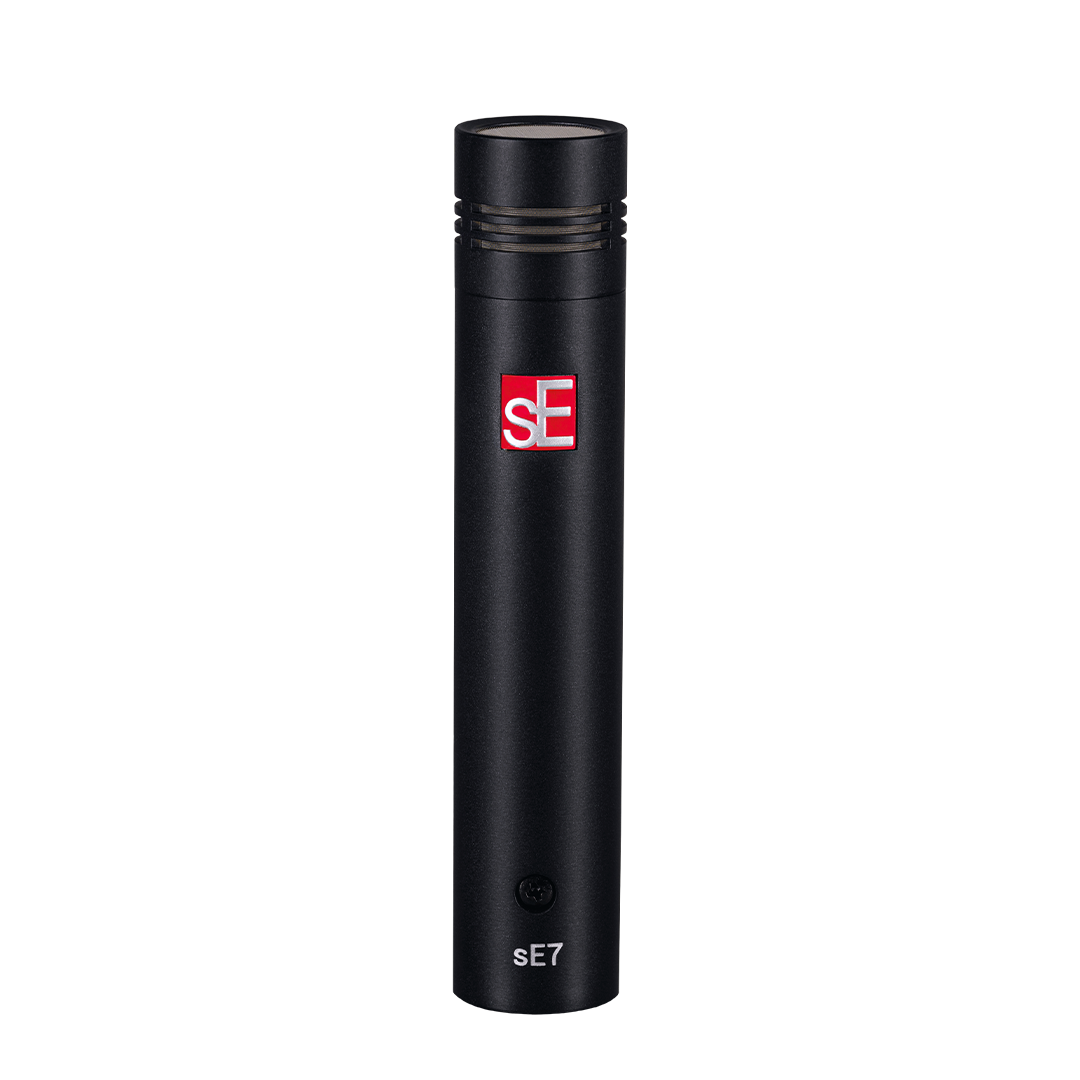
sE7
The sE7 is a versatile small-diaphragm condenser designed for a wide range of recording applications. Whether you’re capturing acoustic guitar, drum overheads, piano, or percussion, it delivers a balanced, natural response while its compact design makes placement easier in crowded recording setups.
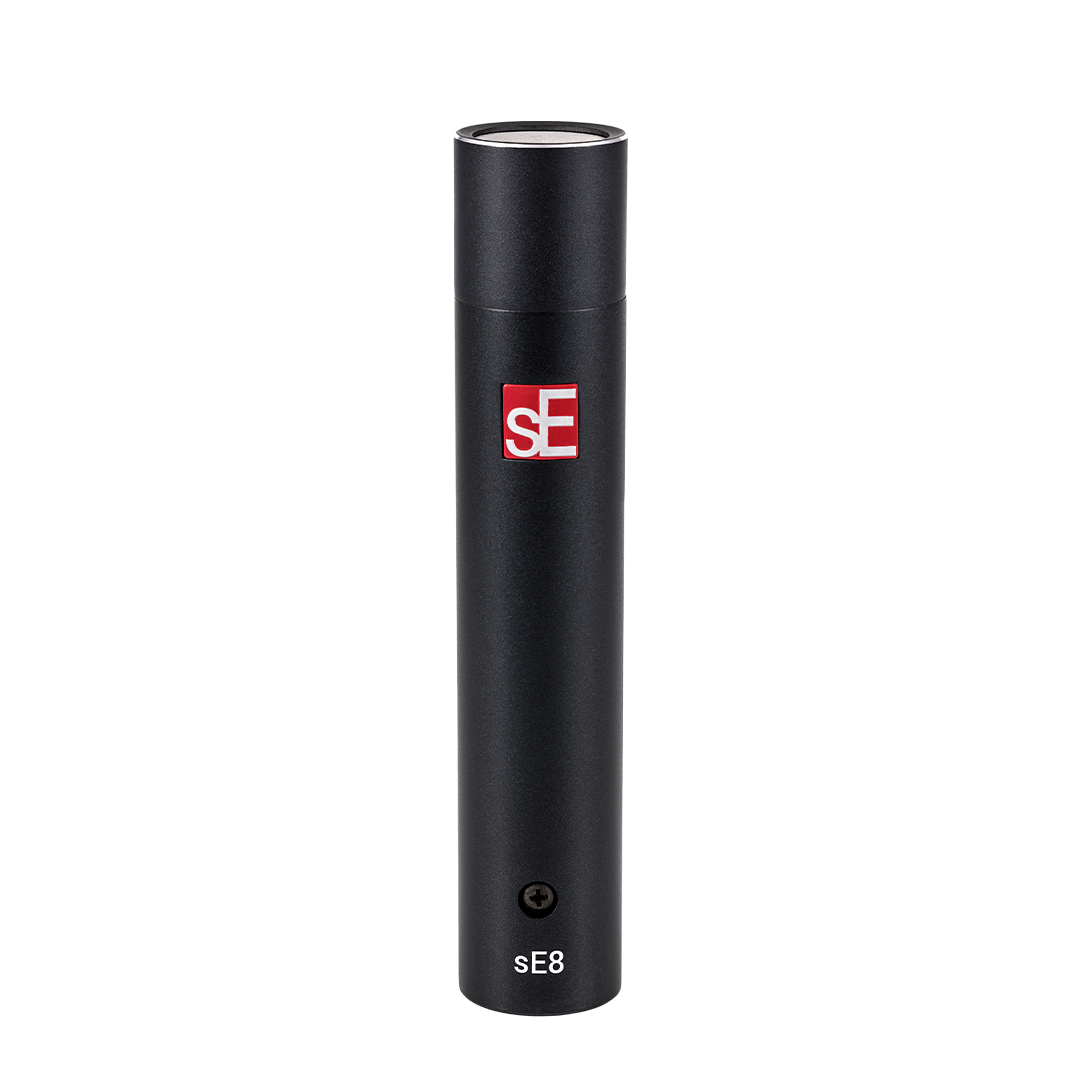
sE8
For engineers who need even greater precision, the sE8 offers exceptionally low self-noise, excellent transient response, and highly consistent off-axis performance. It’s an outstanding option for stereo recording, orchestral work, choirs, and any application where transparency is essential.
When Should You Choose a Large-Diaphragm Condenser?
Large-diaphragm condensers are often associated with studio vocals, but their versatility extends far beyond singers.
They perform equally well on voiceover, podcasting, drum overheads, guitar cabinets, room microphones, brass, acoustic instruments, and many other recording situations. Their combination of sensitivity and detail often helps create recordings that feel rich without sacrificing clarity.
For many home studios, a large-diaphragm condenser becomes the microphone that’s used on almost everything.
Recommended sE Microphones
sE4400
The sE4400 combines the detail and sensitivity expected from a premium large-diaphragm condenser with the flexibility of four selectable polar patterns, making it equally at home on vocals, acoustic instruments, drum overheads, room microphones, and ensemble recordings. If you want one microphone that can adapt to a wide range of recording applications as your studio grows, the sE4400 is an exceptionally versatile choice. If you prefer a cardioid-only version with the same core sonic character, the sE4100 offers the same natural, balanced sound in a streamlined format.
Designed for demanding studio applications, the T2 features a hand-crafted titanium diaphragm that captures exceptionally fast transients while delivering outstanding detail, dynamic range, and clarity. Whether recording expressive vocals or highly dynamic instruments, it offers remarkable accuracy without sacrificing musicality. If you don’t need multiple polar patterns, the T1 provides the same titanium capsule technology and sonic signature in a cardioid-only design.
Which Condenser Microphone Is Better for Vocals?
Large-diaphragm condensers have earned their reputation for vocal recording because they often complement the human voice exceptionally well. Many of the most recognizable vocal recordings in modern music were made with large-diaphragm condenser microphones.
That doesn’t mean they’re always the better choice.
Some voices benefit from the accuracy and articulation of a small-diaphragm condenser, particularly when transparency is more important than added character.
The recording environment matters just as much. Both microphone types are highly sensitive and will faithfully capture room reflections. If your space is untreated, changing microphones won’t eliminate those reflections. Proper microphone placement and acoustic treatment often have a greater impact than diaphragm size alone.
Which Condenser Microphone Is Better for Acoustic Guitar?
Acoustic guitar perfectly illustrates why there isn’t a universal answer.
If your goal is to capture every nuance of fingerstyle playing or preserve the natural attack of a pick, a small-diaphragm condenser is often the preferred choice.
If you’re recording a solo singer-songwriter and want a fuller, more intimate presentation, a large-diaphragm condenser may better complement the performance.
Many professional engineers combine both. An SDC captures articulation and detail while an LDC adds body and warmth, providing greater flexibility during mixing.
Small-Diaphragm vs. Large-Diaphragm Condensers: Quick Comparison
| Feature | Small-Diaphragm Condenser | Large-Diaphragm Condenser |
| Best known for | Accuracy and transient response | Sensitivity and versatility |
| Common applications | Acoustic guitar, piano, drum overheads, strings | Vocals, podcasting, room mics, guitar cabinets |
| Stereo recording | Excellent choice | Less commonly used |
| Off-axis response | Typically very consistent | Depends on microphone design |
| Home studio use | Great for acoustic instruments | Great all-around studio microphone |
Frequently Asked Questions
Is a large-diaphragm condenser better for vocals?
Not always, but it’s often the preferred choice. Large-diaphragm condensers are popular for vocal recording because they combine sensitivity with a presentation many engineers find flattering. The best condenser microphone for vocals ultimately depends on the singer, the room, and the desired sound.
Are small-diaphragm condensers only for instruments?
No. While they’re commonly used on acoustic instruments and stereo recordings, small-diaphragm condensers can also produce outstanding vocal recordings when clarity, articulation, and accuracy are the priority.
Which condenser microphone is better for a home studio?
If your work centers on vocals, podcasting, and general recording, a versatile large-diaphragm condenser is often an excellent starting point. If you primarily record acoustic instruments or want to build a stereo recording setup, a small-diaphragm condenser may be the better fit.
Can you use a small- and large-diaphragm condenser together?
Absolutely. Many engineers pair the two on acoustic guitar, piano, percussion, or room recordings to capture different perspectives of the same source. Combining both microphones provides more tonal options during mixing.
Choosing the Right Condenser Microphone
If you’re deciding between a small-diaphragm and large-diaphragm condenser, don’t think of it as choosing the “better” microphone. Think of it as choosing the microphone that’s best suited to the job.
The more you understand how each design responds to different sources, the easier it becomes to build a microphone collection that works across a variety of sessions instead of chasing a one-size-fits-all solution.
Related products
Read more
-
Sep 02
Meet the New VR1 & VR2 Accessories: Precision Support for Your Most Detailed Recordings
-
Aug 20
V7 MC1 & MC2 CHROME: Premium Wireless Capsule Performance, Now in Chrome
-
Jul 10
The X1 A Gets a Fresh New Look: Introducing the Red & White Editions
-
Jun 30
Small Tool, Big Impact: Why the V CLAMP Deserves a Spot in Every Drum Setup
-
Jun 30
V7 X Black: The Sound You Trust, Now in Black
-
 Jun 10
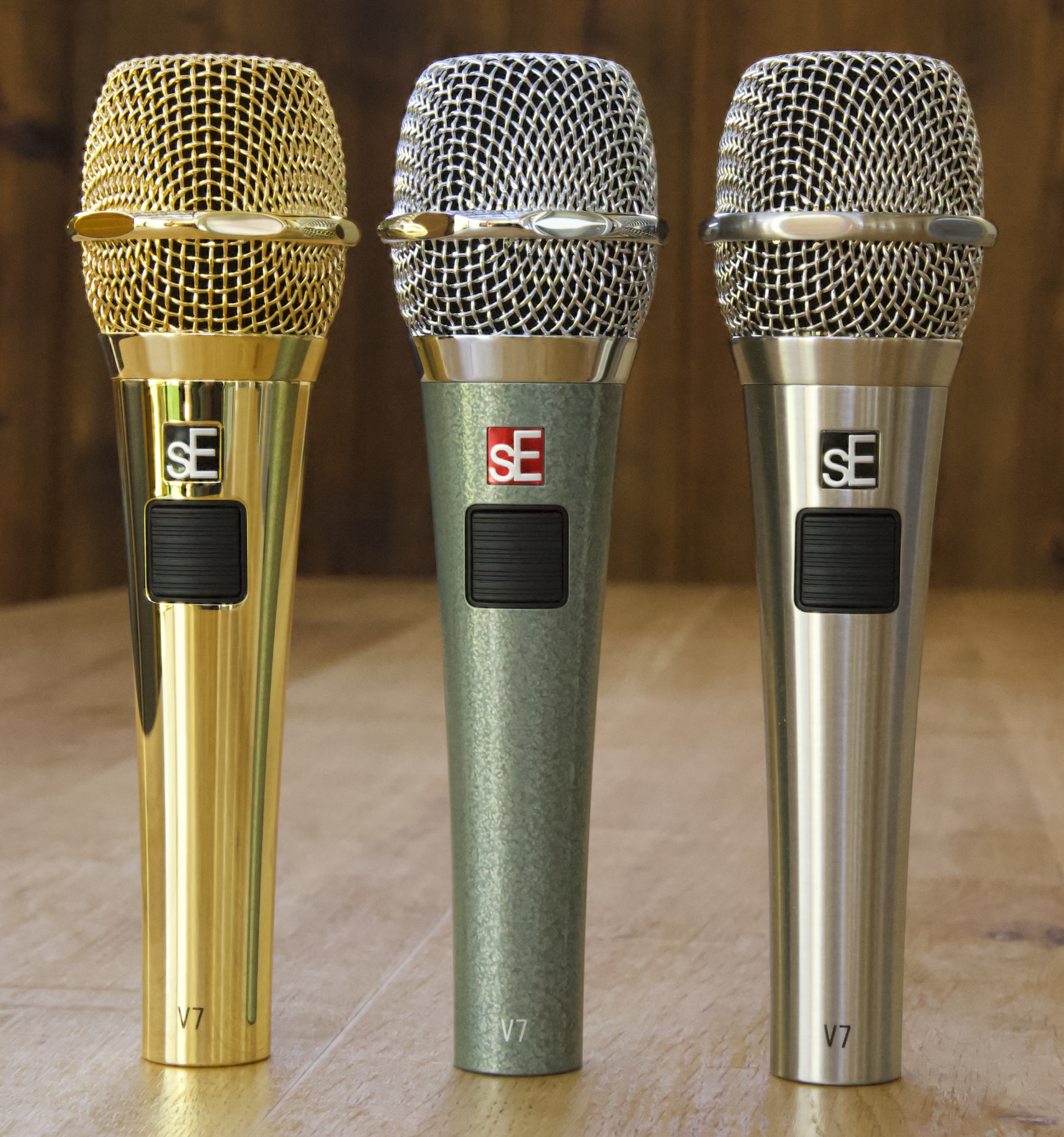
V7 PTT Now Available in Gold, Nickel, and Vintage Finishes
-
May 28
Gain Staging the Right Way: How to Capture Clean, Dynamic Recordings Every Time
-
Mar 03
5 Smart Ways to Use the DM PROCLIP to Tidy Up Your Studio or Stage Rig
-
Dec 15
Tracking R&B Guitars with sE