Buy now

FCP1 HiZ Passive DI

THE PUREST PATH FROM INSTRUMENT TO CONSOLE.

Maximum Signal Integrity. Minimum Compromise.

Buy now

FCP1 HiZ Passive DI

THE PUREST PATH FROM INSTRUMENT TO CONSOLE.

Maximum Signal Integrity. Minimum Compromise.

Recommended Use

Keyboards, synthesizers, laptops, media players, backing tracks, and other instruments or stereo sources.


Highlights
HiZ passive input maintains clarity, punch, dynamics, and tonal balance
Custom-designed, shielded heavy-duty transformer for high headroom, low distortion, and exceptional sound quality
Switchable L+R mono summing combines stereo sources into a single balanced output
Dedicated 3.5 mm (1/8") TRS stereo input for connecting laptops and other stereo sources
Passive design requires no phantom power or batteries
Flexible mounting options for desktops, pedalboards, gig racks, and stage setups
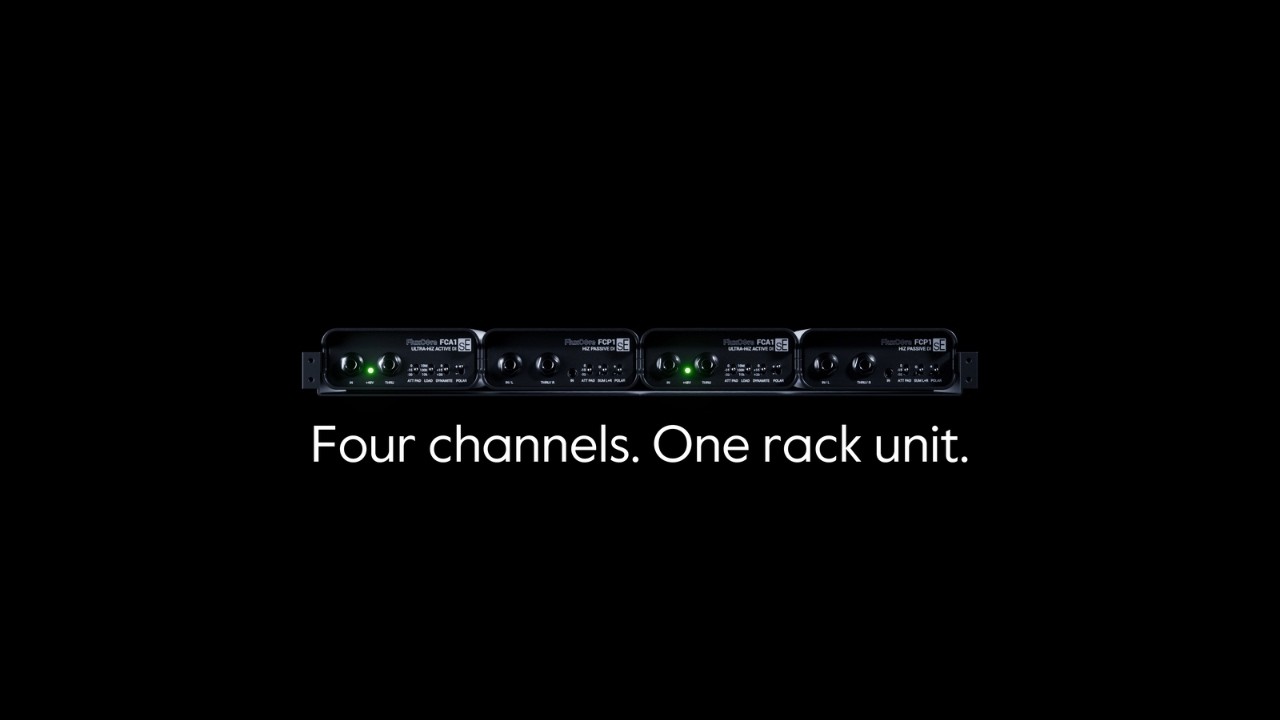
Rack-mountable design accommodates up to four units in a single 1U rack space


Inside FCP1

  • FCP1_In:L-Image-Map

    INPUT & THRU CONNECTIONS

    Connect your instrument or stereo source via the 1/4″ inputs, with thru connections for routing your signal onward to an amplifier or other equipment.

  • FCP1_Input-Image-Map_2400x1200PX

    3.5 MM STEREO INPUT

    Connect laptops and other stereo sources through the dedicated 3.5 mm (1/8″) TRS input, ideal for playback and media audio.

  • Background-Image_2400x1200PX

    SWITCHABLE ATTENUATION PAD

    Choose 0, -15, or -30 dB to accommodate high-output sources, including guitar and bass amplifiers.

  • Background-Image_2400x1200PX (2)

    STEREO-TO-MONO SUMMING

    Combine left and right stereo signals into a single mono output, saving valuable mixer, interface, and stagebox inputs.

  • Background-Image_2400x1200PX (2)

    POLAR SWITCH

    Invert signal polarity to help resolve phase-related issues when combining sources or blending a direct signal with a miked amplifier.

  • FCA1-FCP1-Mounting-Image_2400x1200PX (2)

    FLEXIBLE MOUNTING OPTIONS

    Set up on a desktop, secure the FCP1 to a pedalboard, stack units on stage, or mount up to four units in a single 1U rack space.

  • Background-Image_2400x1200PX (1)

    SHIELDED HEAVY-DUTY TRANSFORMER

    The custom-designed, shielded heavy-duty transformer is engineered for high headroom, low distortion, and exceptional sound quality—helping preserve the integrity of your signal.

  • FCP1_Back_2400x1200PX (1)

    on⁺ GROUND LIFT

    Designed to help minimize hum, ground loops, and radio-frequency interference, on⁺ Ground Lift circuitry helps keep your signal clean in demanding audio setups.


Specs

Electrical
Type Passive DI
Gain -20 dB
Attenuation pad -15 / -30 dB
Powering 48 V phantom power (IEC 61938)
Frequency range 18 Hz – 30 kHz (-0.3 dB)
Recommended load impedance Greater than 1 kΩ
Input impedance (ATT PAD 0 dB) 650 kΩ
Input impedance (ATT PAD −15 dB) 12 kΩ
Input impedance (ATT PAD −30 dB) 10 kΩ
Max input level (ATT PAD 0 dB, 0.5% THD) 30 dBV (33 V)
Max input level (ATT PAD −15 dB, 0.5% THD) 45 dBV (185 V)
Max input level (ATT PAD −30 dB, 0.5% THD) 60 dBV (1,044 V)
Electrical output impedance 168 Ω
Connectivity
Input / L 6.3 mm (1/4") TS jack
Thru / R 6.3 mm (1/4") TS jack
Input 3.5 mm (1/8 in.) TRS stereo jack
Output 3-pin male XLR connector
Dimensions
Dimensions (L × W × H) 127 × 100 × 39 mm (5.0 × 3.9 × 1.5 in.)
Weight 795 g (1.75 lbs.)
What's in the box
FCP1 DI box
Non-slip mat
Hook-and-loop mounting pads
4 rack-mount screws

Downloads

User Manual
  • “sE did it again!! The new FCA1 and FCP1 deliver clean, clear sound, plenty of headroom, and impressively low noise. Built like tanks, they’re perfect for live or studio applications. I love the compact size, clean design, and rock- solid construction. Well done!!”

    — Stanley Soares - FOH, Recording and Mixing Engineer (Megadeth, Sepultura, Meshuggah, Juanes, Lionel Richie, Devin Townsend)
  • ”A chain is only as strong as its weakest link, so for important sources I accept no compromises. The FCA1 and FCP1 give me a clear, honest sound, tour-proof build quality and the flexibility to adapt to any source. The mounting options are something I haven't seen on other DIs. Rack-mounted four across in 1U or sitting on the desk in the studio, they have become a fixed part of my setup and replaced every other DI I owned.”

    — Thimo Strobel - Sound Engineer (FOH, MON, Mixing, Mastering) (Milky Chance, Adel Tawil, Roy Bianco & Die Abbrunzati Boys, Guano Apes, Bosse)
  • ”As a studio guitarist, touring musician and guitar educator, a clean DI track alongside the amp is non-negotiable. It lets me re-amp, monitor, correct a tone decision or simply try out new gear. The FCA1 and FCP1 are roadworthy and compact, but what I love most is that they let me hear the clear, pristine character of my guitars, not the character of a black box in between.”

    — Haiko Heinz - Studio Guitarist, Touring Musician & Guitar Educator (dArtagnan, Neneh Cherry, Culcha Candela, Laith Al-Deen)
  • ”The FCA1 and FCP1 are built rock-solid and keep the signal punchy and direct without taking anything away from the sound. Great tools with very useful features, and they survive even the toughest tour life.”

    — Florian Herkert - Sound Engineer (FOH, MON) (Dick Brave, Sasha, Welshly Arms, Saxon, Ultimate Whitney….)
  • “The FCA1 and FCP1 have everything I want from a DI box, and so much more. They're clean, transparent and incredibly compact. But what really impressed me was how well they solve real problems. On a pretty big production recently, with serious noise coming from the lighting, the on+ Ground Lift setting saved the gig, something no other DI box, from more than four brands I've tried, could do."

    — Edoardo Allertsen - FOH/Monitor/Studio Engineer (Victor Ray, Charlie Jeer, and many more…)
  • "I usually stick with gear I've known for ages, simply because I need things to work. But sE always finds a way to get me to break old habits, and the FCA1 and FCP1 are no exception. I'm conservative, especially when it comes to DI boxes, but their crystal clear, punchy sound and tight low end won me over. They're perfect for heavy guitars and bass, both in the studio and on the road.”

    — Felix Heldt - FOH/Studio Engineer and Producer (Dominium, Feuerschwanz, Visions of Atlantis, dArtagnan)
  • "In the world of DI boxes, you'd think the wheel has been reinvented a few times already. But sE has once again managed to produce a top-tier product that doesn't just sound great, it's also 19-inch rack-mountable and built tough enough to take a hit. All I can say is that my experience during testing and use has been extremely positive."

    — Jurgen Vandewalle - FOH Sound Engineer (Aborted, SNOT, Alien Weaponry, Channel Zero, Fleddy Melculy)
  • ”The FCA1 and FCP1 are built to take whatever you throw at it, with rock-solid construction, phenomenal sound and all the features I need. I love it! You plug in once and never want to play or record without again.”

    — George Bokos - Grindhouse Studios Athens Producer, mixing and mastering engineer (Rotting Christ, Nightstalker, Wolfheart, Melechesh)
How should I store my microphone?

We generally recommend keeping your microphone in its case or original packaging when it is not in use for more than a few hours. If your studio is very clean and safe, it could be OK to leave out on its mic stand when not in use, but if a mic is out of its case, it could potentially be exposed to dust, smoke, moisture, or humidity – which can damage the sensitive parts of the mic – so we recommend avoiding those things at all cost.

What are the differences between your microphones’ polar patterns? How do I choose the most suitable type of polar pattern for my recording environment?

There are no real “right” or “wrong” answers to this question, as different patterns will just provide different types of sounds, and whatever best suits your particular song is usually the right answer! With that said:

  • Cardioid – Generally best for recording vocals or other single sources, when you don’t want to hear much of the room sound around the source.
  • Omni – This is good when you want a less focused, more “roomy” sound. Think distant drum mics in a great-sounding room.
  • Figure-8 – Since this pattern lets the mic “hear” on both sides – front and back – and reject the sounds on either side, it’s handy if you want to record two sources at once from a point in between them, without hearing what’s off to the sides.
  • Hypercardioid / Supercardioid – More directional than Cardioid, this is good for spot mics, when you want the sound to be very focused.
My guitar amplifier / drum / horn is VERY loud, and I am concerned about the risk of damage due to loud noise.

For the most part, sE mics can tolerate extremely high SPLs (typically over 135dB) and will be fine in front of even the loudest sources – yes, even our ribbon mics. If in doubt, you can check the specifications on the individual product page.

Which sE mic is best for recording vocals / drums / guitars / etc.?

Check out our Find Your Mic page to find the perfect mic for your application.

How do I clean the microphone from spillage and dirt?

If your microphone has come in contact with dirt or another removable substance, we recommend cleaning it with a very soft, slightly damp cotton cloth. Do not open the microphone up to clean the inside, and make sure you NEVER touch the capsule itself. Cleaning a capsule should only be done by highly trained professionals in a “clean room” environment. If you suspect your capsule needs to be cleaned, please contact [email protected] so we can recommend an authorized local technician.

How do I connect my microphone to my computer?

You’ll need some sort of audio interface to do this – essentially, a box that converts an analog signal into a digital one, and sends the digital signal to your computer software in a way that your computer can understand. Some audio interfaces also include microphone preamplifiers, which raise the signal level from “mic level” to “line level” – if you are using an interface with no built-in preamp, you’ll need to plug the mic into a separate mic preamp first.